Alwazour Technical
AR Request a quote on WhatsApp
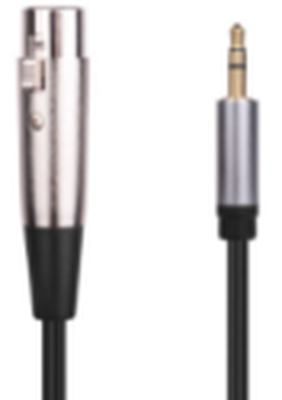
XLR to 3.5mm Microphone Cable - 20m
In stock

XLR to 3.5mm Microphone Cable - 20m

AUD-XLR-35-20M

A microphone lead. The XLR end is balanced, so noise picked up along the run cancels at the far end.

Length
20 m
Connectors
XLR / 3.5mm
In-depth technical details

3-pin XLR (AES14-1992): pin 1 = ground/shield, pin 2 = hot (+), pin 3 = cold (-) -- this is what balanced audio physically is: pin 3 carries an inverted copy of the signal, so noise picked up equally by both conductors cancels at the receiving end. A 3.5mm TRS plug (one insulating band) carries tip=left, ring=right, sleeve=ground in the common unbalanced-stereo wiring.

From its box

Scroll to explore

End A

XLR

  • 01 3 pins: ground, hot, cold The signal is sent twice, one copy inverted. The far end flips it back and adds them, cancelling any noise the cable picked up.
  • 02 Locking latch You must press the latch to release it, which is why a stage microphone does not come unplugged when someone trips on the cable.
  • 03 Metal barrel The barrel is grounded and acts as a shield around all three pins.
  • 04 Strain-relief boot Stops the wires flexing where they leave the plug — the exact point most cables fail.
  • 05 Outer jacket The outer sheath protecting the conductors inside from abrasion and moisture.

Technical illustration, not a photo of the actual product

3.5mm

End B

3.5 mm jack

  • 01 Tip Carries the left channel in stereo use, or the whole signal in mono.
  • 02 Ring The right channel. Crackle when you wiggle the plug is this ring losing contact.
  • 03 Sleeve The common ground — the voltage reference the signal is measured against.
  • 04 Insulating bands The black bands keep the conductors apart. Without them the channels short to ground.
  • 05 Strain-relief boot Stops the wires flexing where they leave the plug — the exact point most cables fail.
  • 06 Outer jacket The outer sheath protecting the conductors inside from abrasion and moisture.

Technical illustration, not a photo of the actual product

How it works

Hybrid audio cable (XLR to unbalanced)

The XLR end is wired balanced (two opposite-polarity conductors), but the far end is single-ended. Differential noise cancellation only exists up to where the signal reaches the unbalanced jack, so the cable as a whole is limited by its weaker end.

  • 01 The balanced XLR end Balanced only up to the point it converts to the unbalanced connector on the other end.
  • 02 Shield A grounded conductive wrap that absorbs electromagnetic interference before it reaches the signal.
  • 03 Outer jacket Protects everything inside mechanically. It plays no electrical role.

Technical illustration, not a photo of the actual product

From the published standard

How it works

A balanced cable sends the signal twice on two wires, one of them polarity-inverted. Any noise the cable picks up along its length hits both wires equally, so when the far end flips the inverted copy back and adds them, the signal doubles and the noise cancels. This is common-mode rejection, and it is why microphone cables work over tens of metres without hum.

Principle
Common-mode rejection of interference
Conductors
Hot, cold and ground, inside a shield
Connector
XLR, 3-pin, latching

This information comes from published sources about this type of product, not from the supplier.

Technical specifications

Length20 m
ConnectorsXLR / 3.5mm

Not sure this is the right part?

Ask on WhatsApp, and get an answer from a team that actually knows the stock.

Request a quote on WhatsApp
In stock Request a quote on WhatsApp
WhatsApp

Type to search