 Alwazour Technical
Alwazour Technical
Alwazour Technical
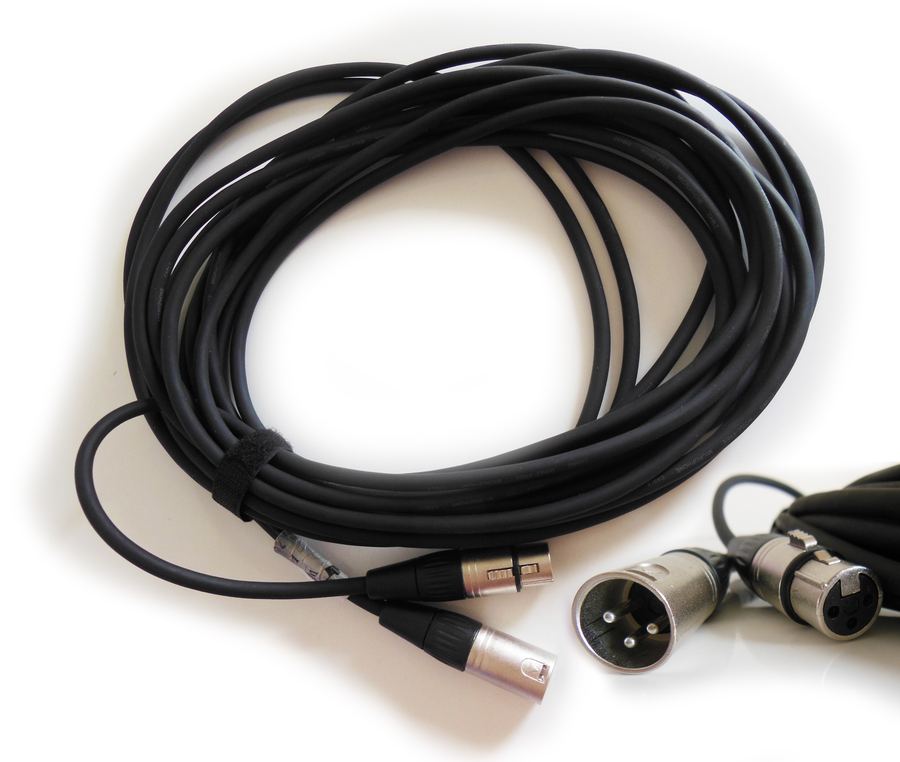
AUD-XLR-XLR-20M
A microphone lead. The XLR end is balanced, so noise picked up along the run cancels at the far end.
XLR's 3 pins carry a real signal, not just a shape: pin 1 = ground/shield, pin 2 = hot (+), pin 3 = cold (-). This is physically what balanced audio is -- pin 3 carries an inverted copy of the signal, so noise picked up equally by both conductors cancels out at the receiving end.
From its box
Scroll to explore
Connector anatomy
Technical illustration, not a photo of the actual product
How it works
Two wires carry the same signal in opposite polarity. Any noise the cable picks up hits both equally, so the far end cancels it by subtraction. That is why a balanced cable runs tens of metres without hum.
Technical illustration, not a photo of the actual product
From the published standard
A balanced cable sends the signal twice on two wires, one of them polarity-inverted. Any noise the cable picks up along its length hits both wires equally, so when the far end flips the inverted copy back and adds them, the signal doubles and the noise cancels. This is common-mode rejection, and it is why microphone cables work over tens of metres without hum.
This information comes from published sources about this type of product, not from the supplier.
| Length | 20 m |
|---|---|
| Connectors | XLR |
Ask on WhatsApp, and get an answer from a team that actually knows the stock.
Request a quote on WhatsApp